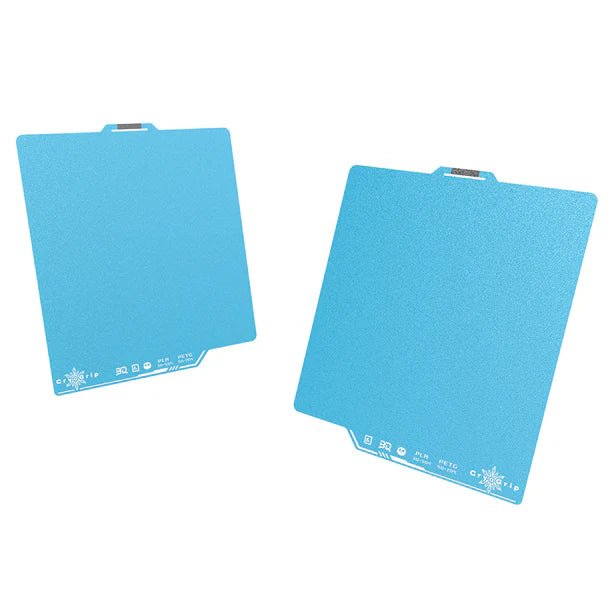
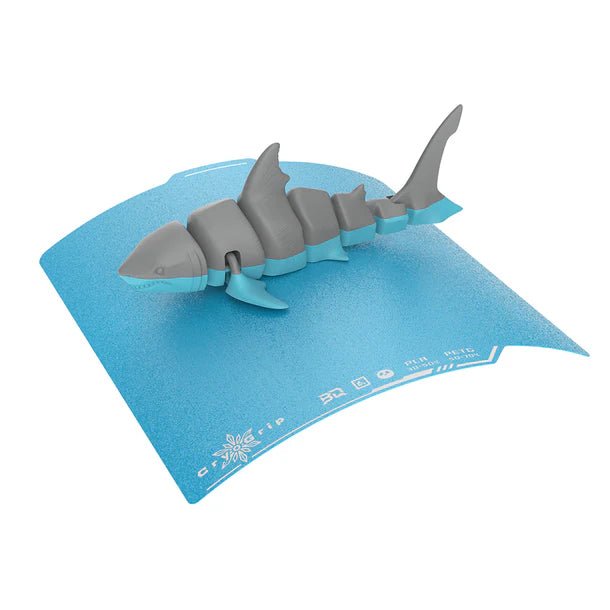
I purchased three Glacier plates (one each for my Bambu P1S, P2S, and X2D) after hearing excellent things about them. Overall, the build quality is excellent, and the finish is nice.
Unfortunately, my experience with the plates themselves was mixed.
On my P1S, the Glacier performed wonderfully. Adhesion was excellent, even on parts with very small contact areas, and it produced successful print after successful print. It felt like a great match for that printer.
My P2S was a different story. While many prints were successful, I experienced occasional corner lifting on larger parts that simply didn’t occur on the stock textured PEI plate.
The X2D proved to be the most challenging. Using the Cool Plate SuperTack profile, I found the Glacier had a much narrower tuning window than expected. I spent considerable time experimenting with temperatures, nozzle offset, and troubleshooting inconsistent adhesion. Some prints came out beautifully, while others under seemingly identical conditions would warp or lose adhesion. Eventually, I switched the X2D back to the standard textured PEI plate, where those same prints immediately became much more consistent.
I don’t believe the Glacier is a bad product—I actually think it’s a well-made specialty build plate that offers impressive adhesion under the right conditions. However, in my experience it wasn’t a drop-in replacement for the standard textured PEI, and it required more tuning than I was looking for on two of my three printers.