


Beschreibung
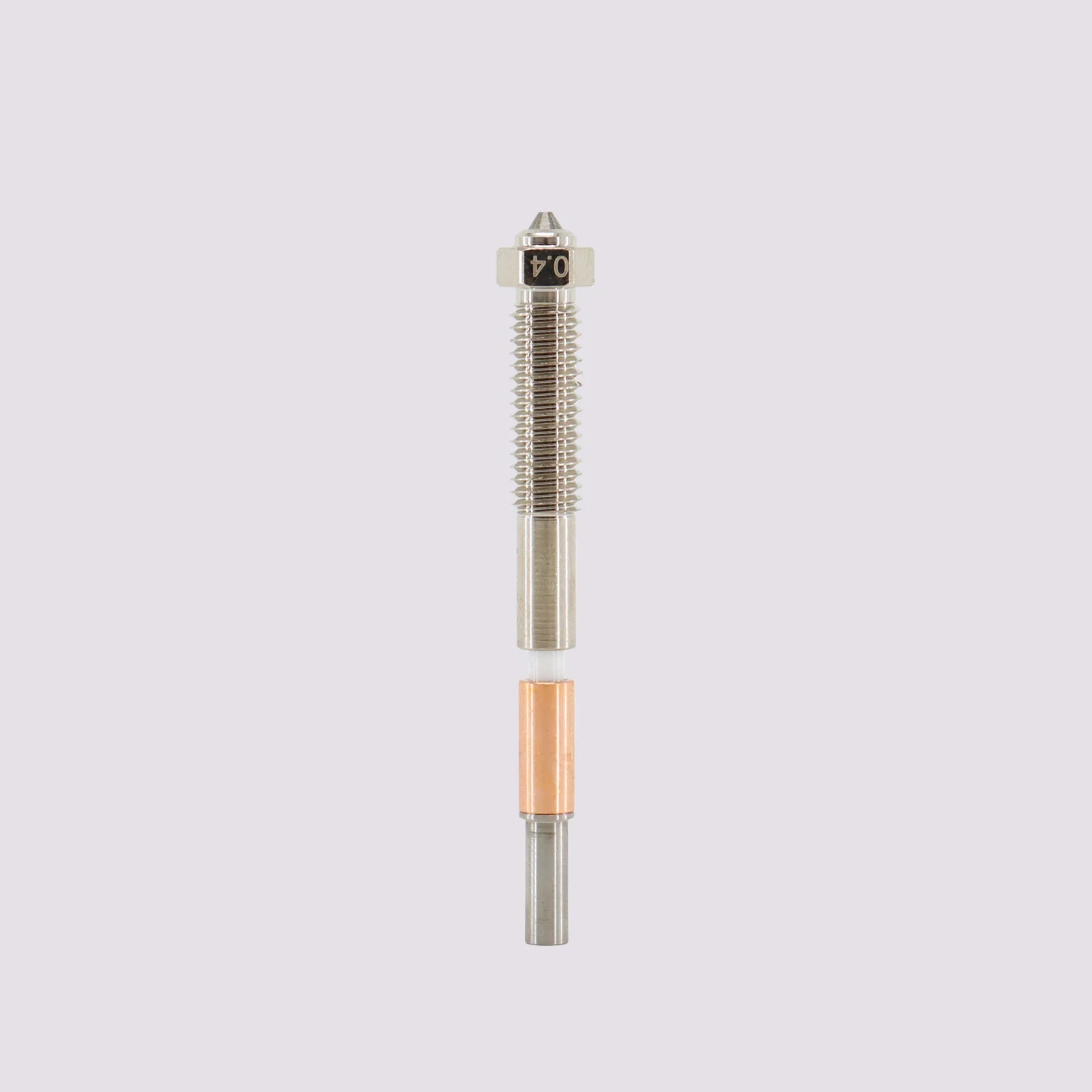
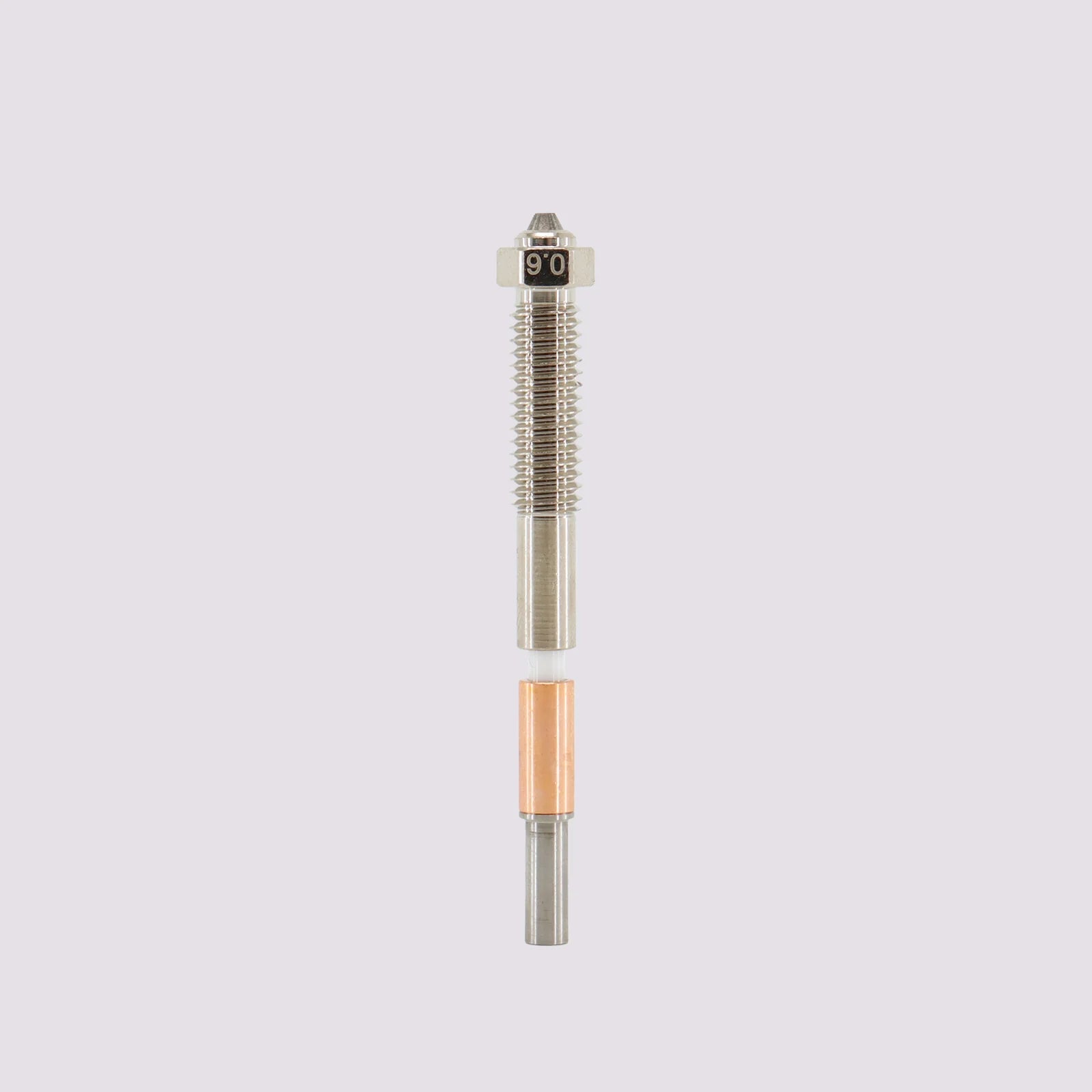
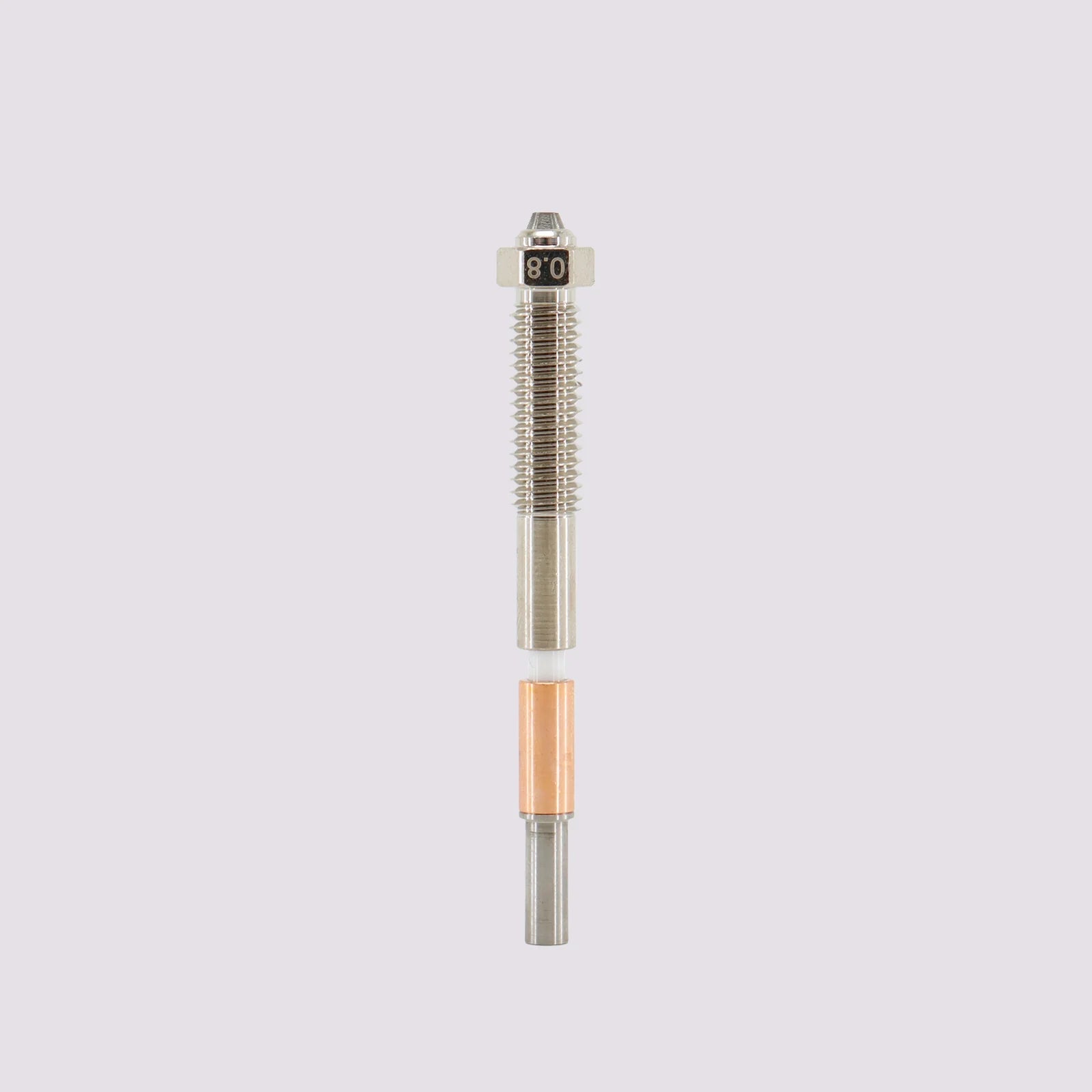
QIDI MAX4 Tungsten Carbide Bimetal Nozzle – Genuine OEM
Go ahead. Print the abrasive stuff.
The QIDI MAX4 Tungsten Carbide Bimetal Nozzle is the premium OEM nozzle upgrade for users who regularly print carbon-fiber, glass-fiber, glow-in-the-dark, and other abrasive materials. It combines an exceptionally wear-resistant tungsten carbide filament path with a thermally efficient bimetal construction, giving you the durability needed for demanding materials without accepting the sluggish heating commonly associated with traditional hardened-steel nozzles.
Designed specifically for the QIDI MAX4, this genuine QIDI replacement provides the correct fit, nozzle geometry, and integrated hotend design—because “it looks close enough” is rarely how you want a hotend installation to begin.
Built for Abrasive Filaments
Composite and filled filaments can wear through ordinary brass nozzles surprisingly quickly. As the nozzle opening erodes, extrusion becomes less consistent, dimensional accuracy suffers, and your carefully tuned settings slowly stop behaving the way they should.
Tungsten carbide offers outstanding resistance to abrasive wear, making this nozzle an excellent long-term choice for materials including:
-
Carbon-fiber-reinforced filament
-
Glass-fiber-reinforced filament
-
Glow-in-the-dark filament
-
Wood-filled filament
-
Metal-filled filament
-
Ceramic-filled filament
-
Engineering and composite materials
-
Standard PLA, PETG, ABS, ASA, Nylon, and Polycarbonate
You certainly do not need tungsten carbide to print regular PLA—but it also will not complain when you do.
Durability Without Sacrificing Thermal Performance
Traditional hardened-steel nozzles are durable, but steel conducts heat less effectively than brass or copper. That can require temperature adjustments and may limit material flow at higher print speeds.
This nozzle’s bimetal construction helps move heat efficiently into the melt zone while the tungsten carbide section handles direct contact with the filament. The result is a nozzle designed to combine strong thermal performance with exceptional wear resistance.
That makes it well suited to the MAX4’s high-speed capabilities, especially when printing reinforced engineering materials where both steady flow and nozzle longevity matter.
Integrated Nozzle and Throat Assembly
The nozzle and throat are combined into a single all-metal assembly for straightforward removal and replacement. The integrated design maintains the intended MAX4 hotend geometry and eliminates an additional threaded connection within the melt zone.
Fewer individual parts mean fewer opportunities for leaks, installation errors, and discovering that the nozzle you ordered is technically compatible only after three adapters and some creative interpretation.
Choose the Right Nozzle Size
0.4mm – Everyday Precision
The most versatile option for balancing detail, print speed, and material compatibility. A good choice for users who want tungsten carbide durability while maintaining the familiar resolution of a standard 0.4mm nozzle.
Some heavily filled filaments may still be more prone to clogging at this diameter, so always follow the filament manufacturer’s minimum nozzle-size recommendation.
0.6mm – The Composite Workhorse
Our likely pick for most users printing carbon-fiber- or glass-fiber-reinforced materials. The larger opening reduces the chance of fiber-related clogs while allowing increased flow, thicker walls, and stronger functional parts.
It is a great middle ground between print detail and getting the job done sometime this week.
0.8mm – Maximum Flow
Ideal for large models, thick walls, rapid prototyping, and strong functional parts. The wider opening handles heavily filled materials more comfortably and lets the MAX4 push more plastic with fewer extrusion restrictions.
Tiny lettering may not be its specialty. Large, strong parts absolutely are.
Why Choose Tungsten Carbide?
-
Exceptional resistance to abrasive filament wear
-
Longer service life than standard brass or hardened-steel nozzles
-
Bimetal construction for efficient heat transfer
-
Suitable for high-flow and high-speed printing
-
Maintains nozzle diameter and extrusion consistency over extended use
-
Ideal for carbon-fiber and glass-fiber composites
-
Works with both engineering and everyday filaments
-
Genuine QIDI OEM fit and compatibility
For occasional abrasive printing, QIDI’s hardened-steel bimetal nozzle may be all you need. For regular composite-filament use—or for anyone who would rather buy the premium nozzle once and stop thinking about nozzle wear—the tungsten carbide version is the upgrade.
Features
-
Genuine QIDI OEM replacement nozzle
-
Designed specifically for the QIDI MAX4
-
Tungsten carbide filament-contact surface
-
Highly resistant to abrasive wear
-
Thermally efficient bimetal construction
-
Integrated all-metal nozzle and throat design
-
Quick removal and straightforward replacement
-
Suitable for reinforced and filled filaments
-
Available in 0.4mm, 0.6mm, and 0.8mm diameters
Compatibility
-
QIDI MAX4
This nozzle is made specifically for the MAX4 hotend. QIDI printers may use different nozzle lengths, throat designs, and hotend geometries, so compatibility with other QIDI models should not be assumed.
What’s Included
-
1 × Genuine QIDI MAX4 tungsten carbide bimetal nozzle in the selected diameter
Installation and Use
Always unload filament and allow the hotend to reach the appropriate service temperature before removing or tightening a nozzle. Follow QIDI’s installation instructions and use the correct tools to avoid damaging the heater assembly.
After changing nozzle diameters, update the nozzle size in your printer and slicer settings. Recheck your Z offset and first layer before beginning a long print.
For abrasive or fiber-filled materials, confirm the filament manufacturer’s recommended minimum nozzle diameter. A larger nozzle—typically 0.6mm or 0.8mm—can reduce clogging risk and improve extrusion consistency