Summary -
Pros: Does what it says on the tin, great for engineering filaments, very quiet, cheaper than the closest alternative.
Cons: Appears to be open-loop (no actual temp control), not well insulated and leaks hot air, no humidity maintenance mode, not a dry box.
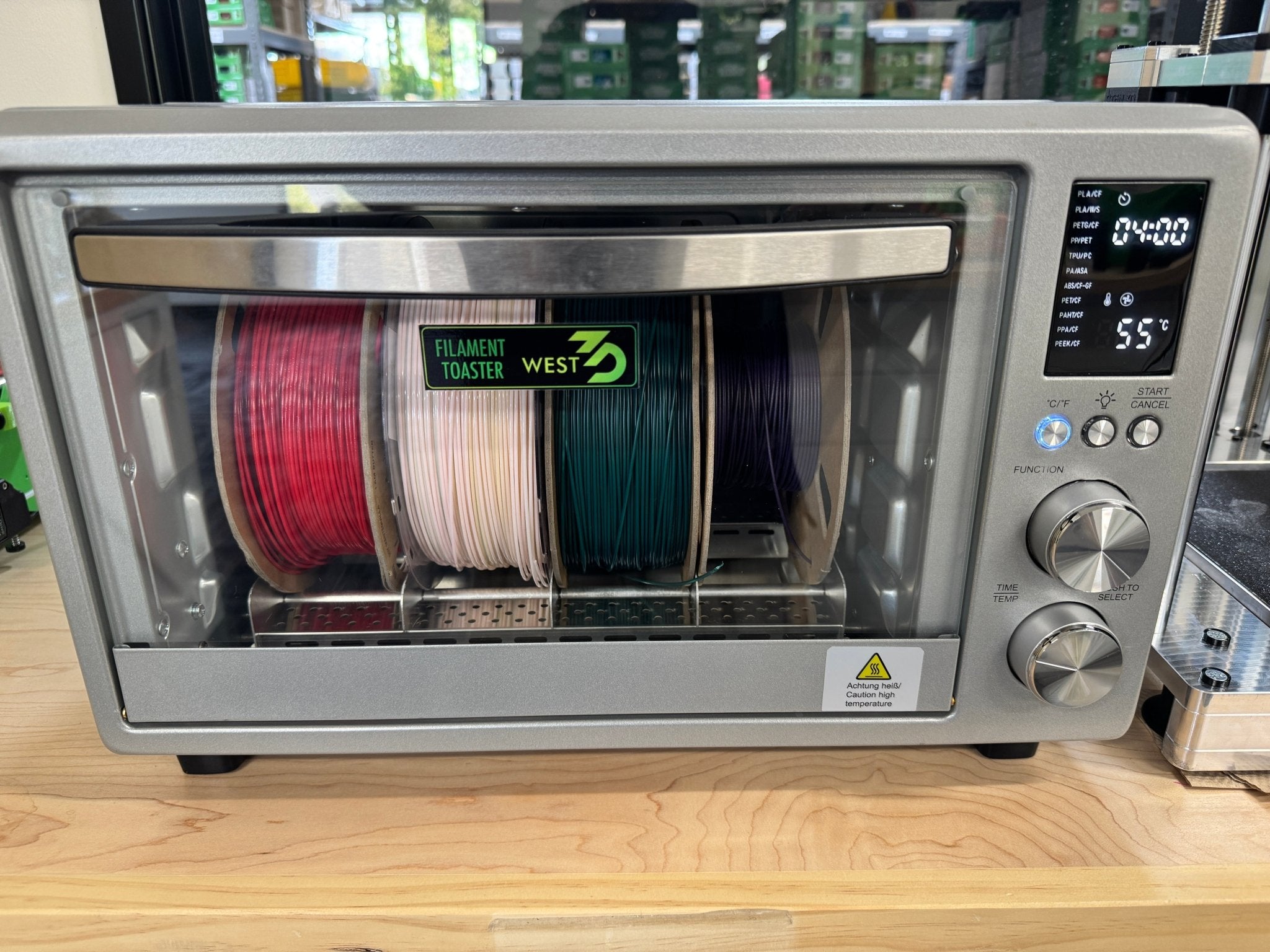
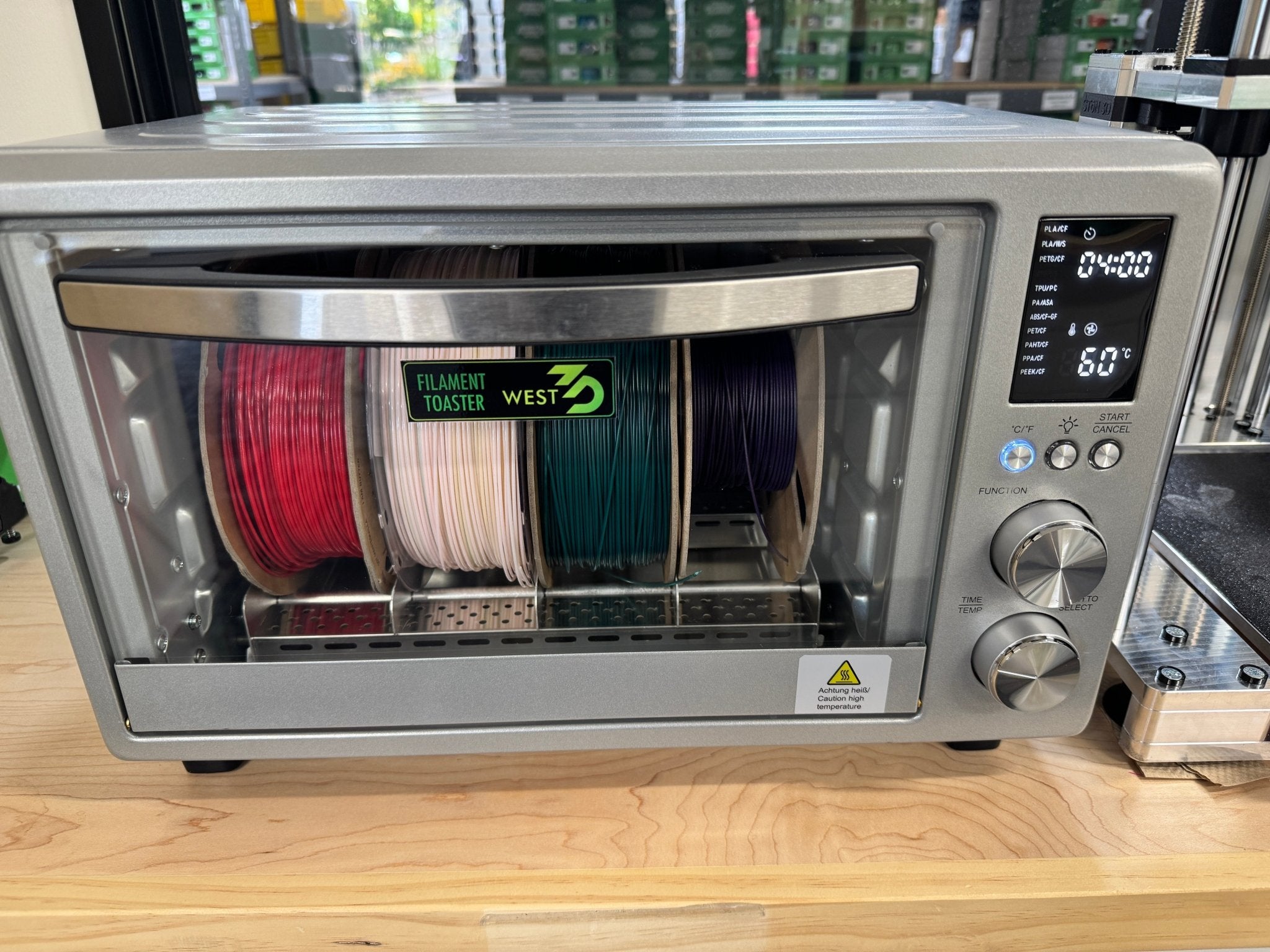
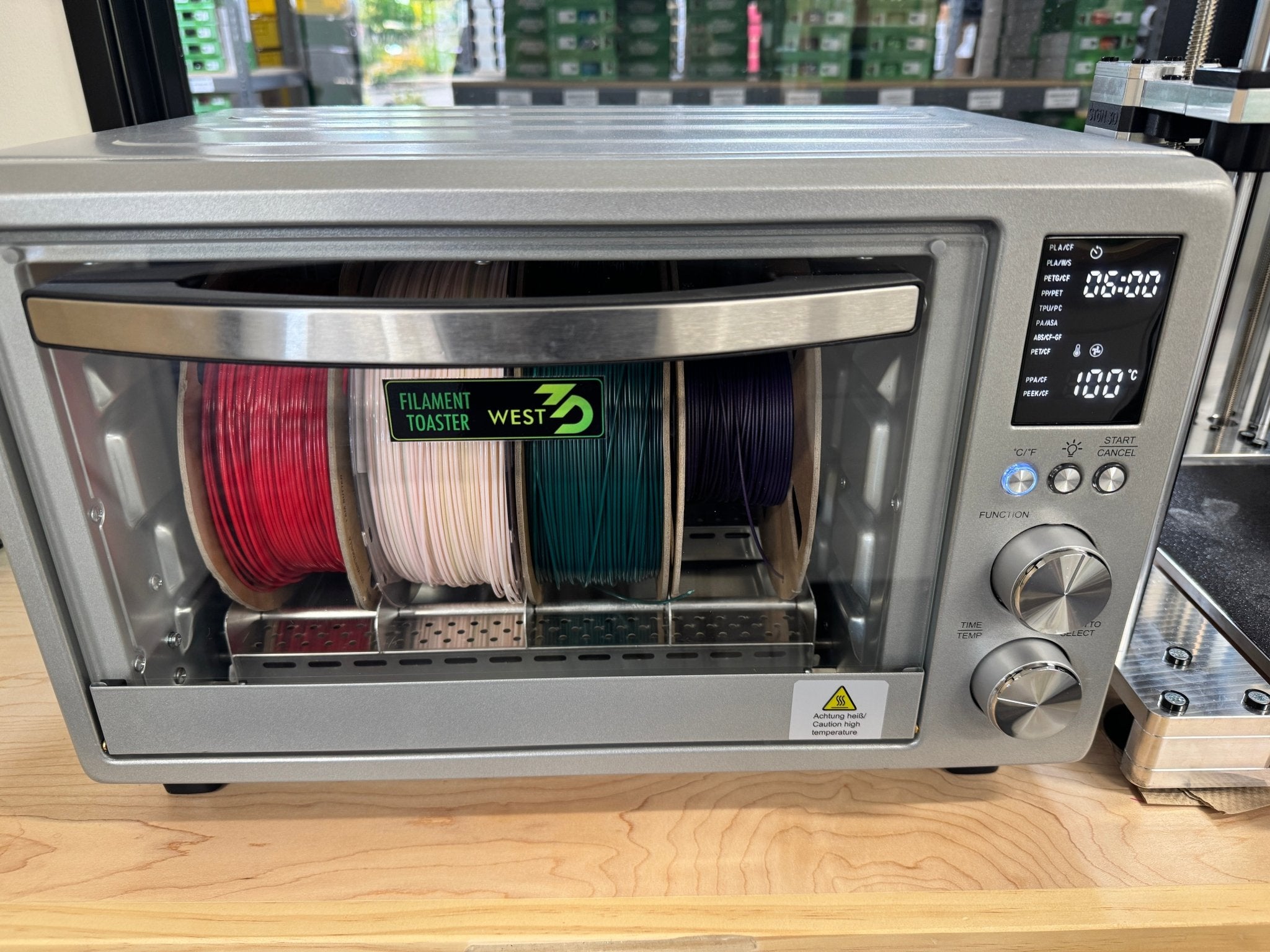
Elephant in the room up front, this is a rebadged Goofoo FD01 Pro, an existing product from a Chinese manufacturer. This is not a bad thing in my mind, the thought of manufacturing things at scale that could burn my house down is less unsettling than if they were building onesies and twosies with less testing. The FD01 Pro is nearly impossible to import into the US yourself, and it does fit an otherwise unfilled niche, so I very much appreciate West3D bringing it here.
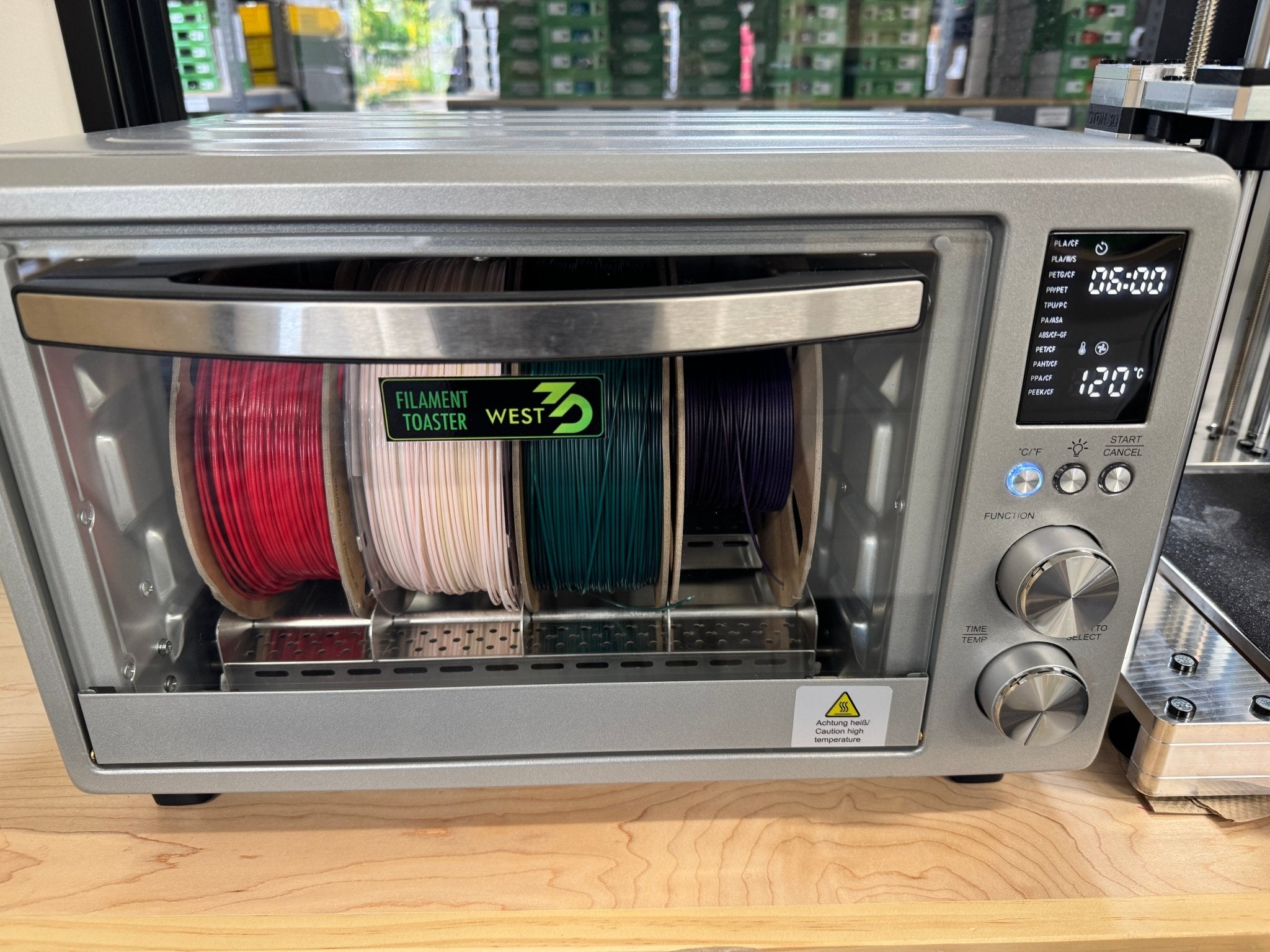
The closest competitor is probably the Sunlu E2. Between the two, the capabilities are pretty similar but with four pretty big differences. The first is that the Filament Toaster cannot be set to maintain a humidity level. I know the Sunlu S4 has a maintenance mode where it will kick on automatically at 30% RH and drop it back down on a cycle, and I think the E2 can do the same. As far as I can tell, you can't do that with the Filament Toaster. The second major difference is that the E2 can sort of be used like a dry box, although not a very good one. There are dessicant slots, and the lids seal well enough to prevent air circulation from outside. The Filament Toaster is not sealed at all, so filament should be removed after drying and sealed properly. Neither of these things are deal-breakers, it's an expensive dry box when vacuum bags are so cheap. Third, there does not appear to be any closed loop feedback. The heating element seems to simply cycle on and off on predefined duty cycles. This is probably good enough, but the E2 does have an internal temperature sensor and actively controls the temperature. I could be wrong about the Toaster, but I don't see any evidence of closed-loop behavior, and there's no mention in the manual, so I think it's unlikely. Finally, the Toaster can go a little hotter than the E2 (120°C vs 110°C). I don't know
what I would realistically be doing that needs that, but it's likely important if you have the ability to play with PEEK or Ultem. Of course, these differences must be considered with respect to the price disparity, the Toaster is considerably cheaper than the E2, but still only a few spools of exotic filament between them.
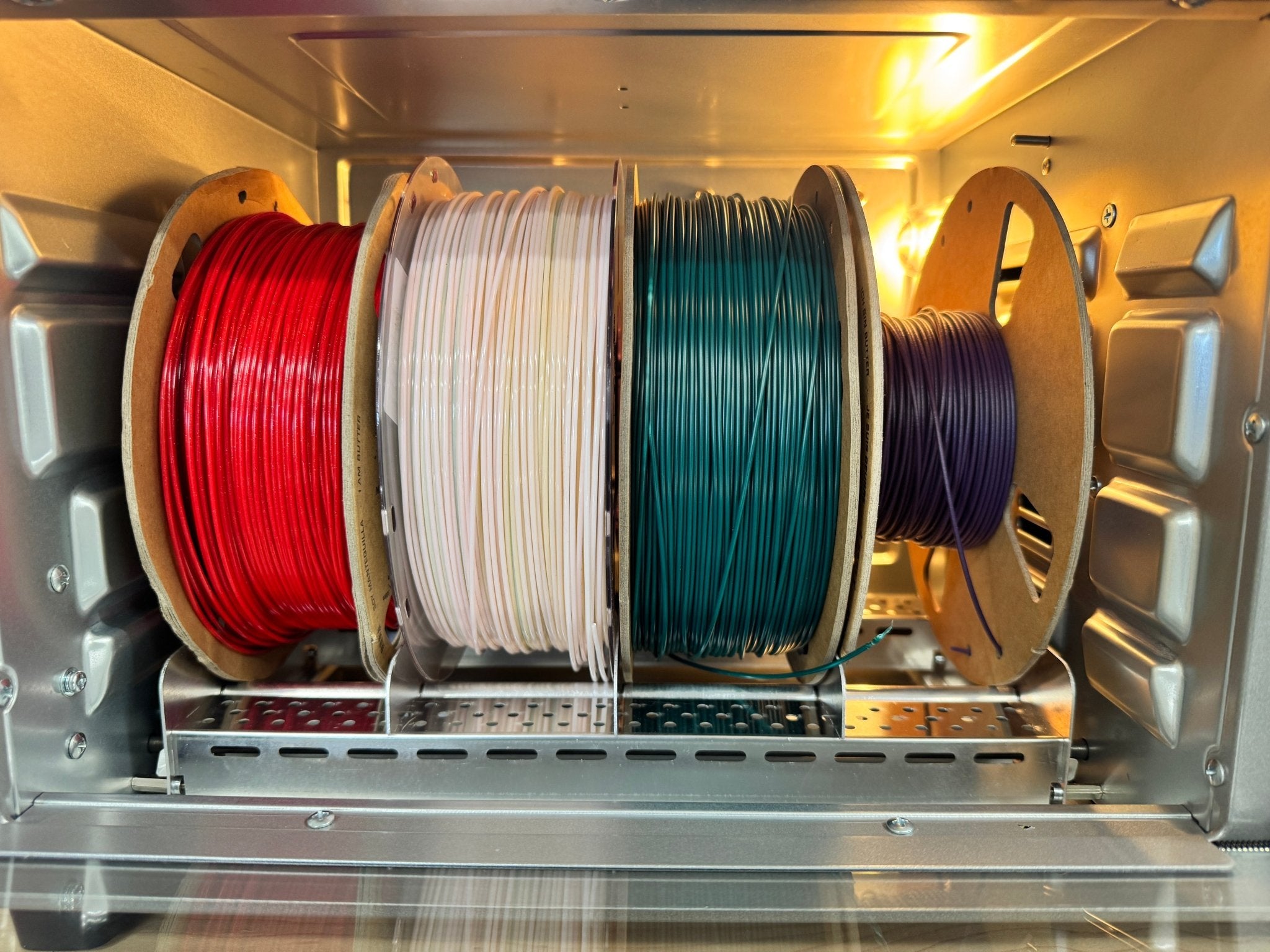
My Filament Toaster is replacing a Sunlu S4. The S4 has a 70°C limit, which has become a bottleneck for nylon, polycarbonate, and engineering composites. The Toaster is a very convenient way to handle drying these high temp exotics.
It's surprisingly quiet. There is a circulation fan running in it any time it's drying, but I cannot hear it at all. I can hear the click of the relay turning the heating bar on and off, but it's quite gentle and doesn't keep me from falling asleep or wake me up. The S4 isn't loud per se, but you can absolutely hear the fan running and it toes the line between calming white noise and annoying.
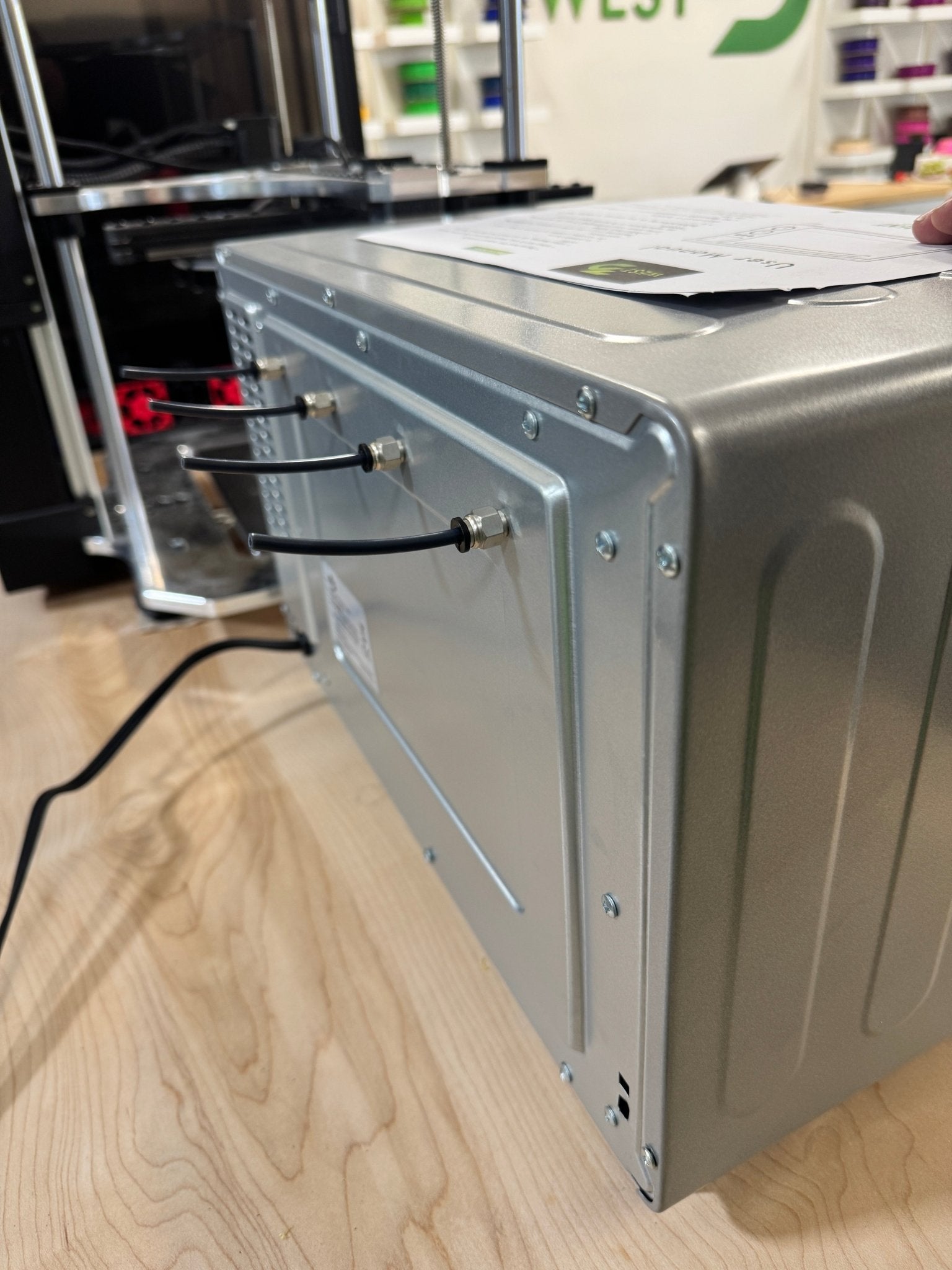
The missing fifth star is for the lack of insulation. It's a toaster oven. The frame is not meant to retain heat for hours and hours, and while the double-layer sheet metal (maybe with insulation inside?) does a better job retaining/isolating heat than I would have thought, the outside still does get pretty hot when you're drying high temp materials, and the single pane glass door is not something you should touch. There is also a decent gap around the door through which hot air escapes, and the vents on the side imply that's by design. It's already sweat stain weather in Texas 80% of the year, and I don't feel great about using electricity to make heat only to use more electricity to move it outside. I understand that air does need to be vented in order to release the moisture, but I'd prefer that be done in a more controlled manner. A door seal and a double-pane door would be ideal, along with some more frame insulation to keep it from melting its surroundings, but it's not so unreasonable as is for me to be upset.
Overall, I'm glad I got this. It absolutely does what I need it to. I imagine it's also good for annealing, although the manual proclaims this is ONLY for drying (despite the machine including a tray, perhaps this is for large spools laying flat). Use at your own discretion. I appreciate the capabilities and convenience this adds to my arsenal, and it was well worth the pre-order batch wait.