
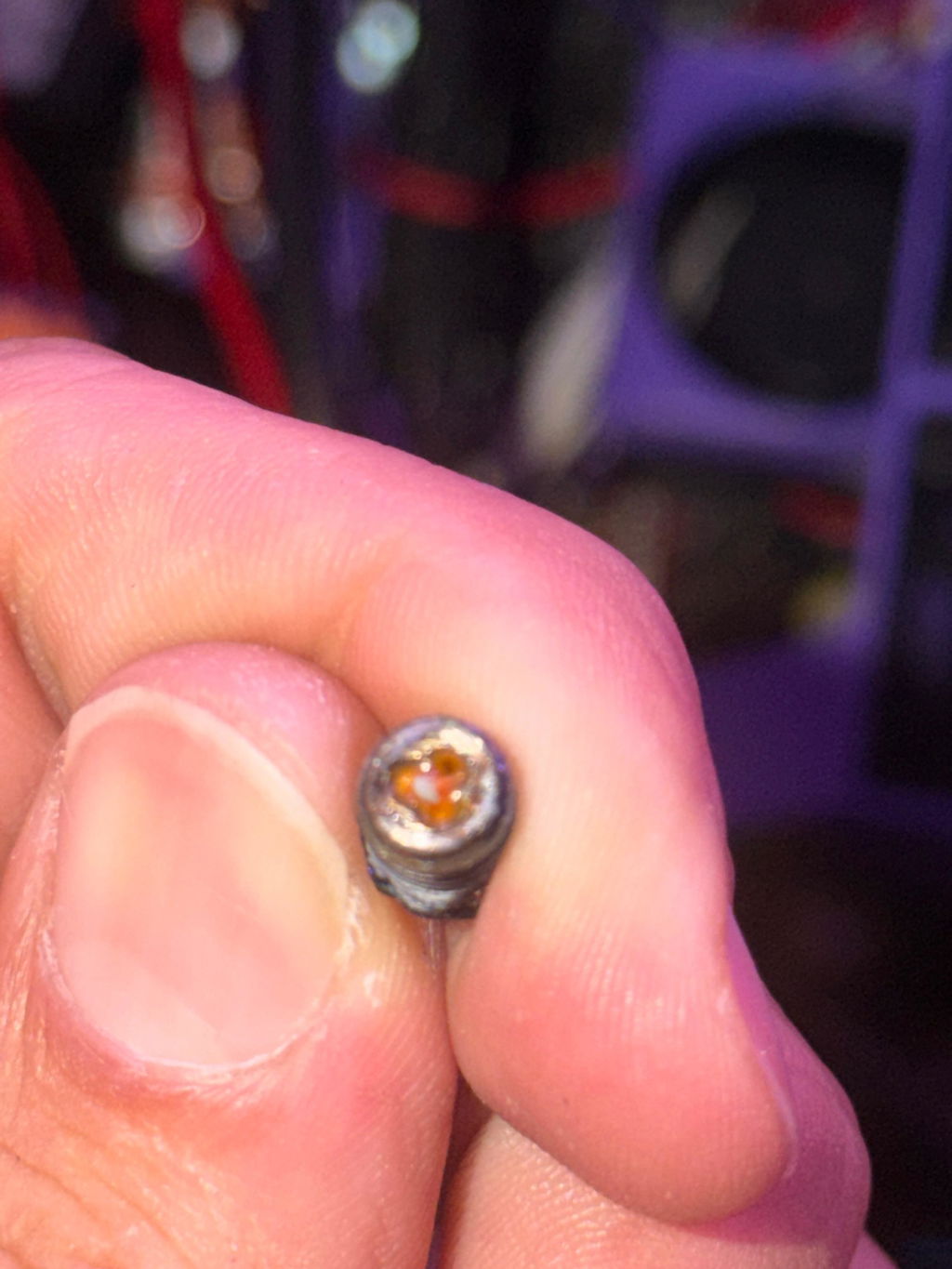
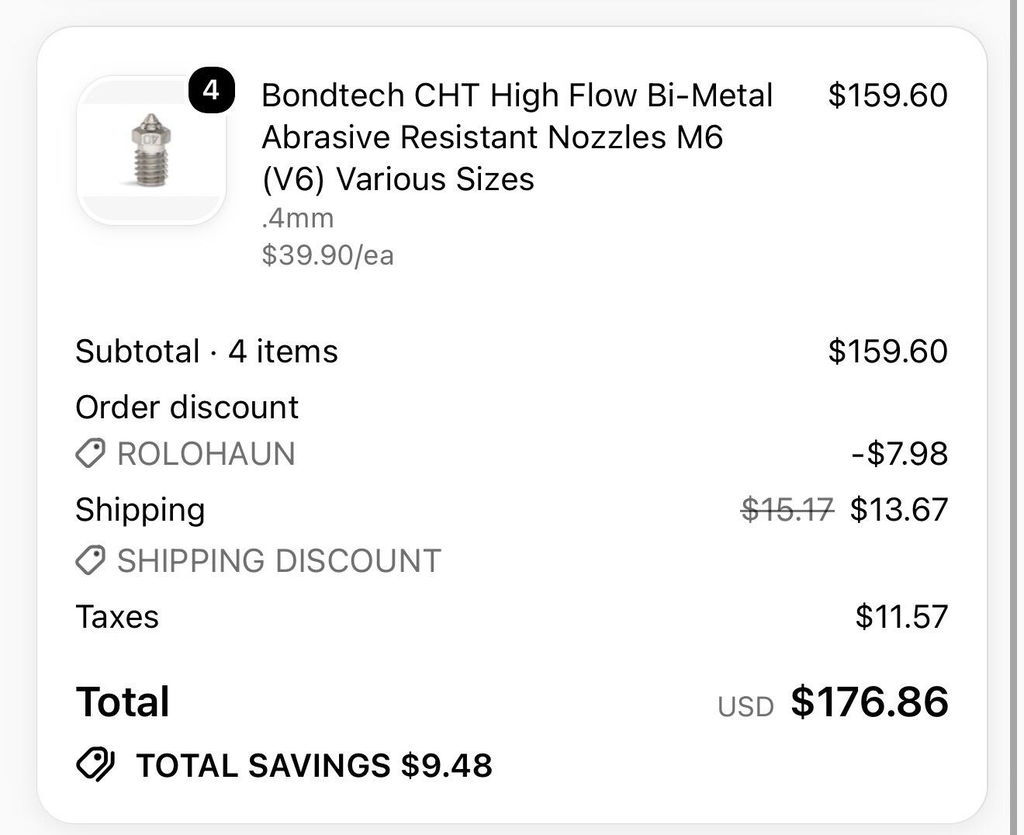
Update on these nozzles, the sparkle filament will eat them away so the “abrasive” resistance seems false advertising, couldn’t use mine after less than 1/3 of the spool being used, horrendous experience.
Didn’t even last a month.

always good stuff glad I found 3dwest.

Fast accurate shipping and delivery
Awesome quality on parts

Perfect and a little oversized (the magnet) so you can trim it!

I bought this to replace the stock camera that I broke by mistake. Connected easy. Lots of available mounting options. I did get the 2 meter cable.

Looks like they took some FPV cams and stuck them on some huge boards. Not very impressed.
This tip prints TPU like nobodies business and doesn't stick to the nozzle. I will be buying more.

Has all the pieces you will need for a BMG wristwatch or clockworks, or similar extruder. And then some. The gear shaft hobbed gear is not pressed on so this will work even with a reverse Voron extruder design.

With no problems. Perfect fit and operation.

This is a tiny bit thicker than the LDO/Voron one you might get with a kit, but not enough that it is a bother. Fits perfectly in a V2.4/350mm printer.

My Revo Voron hotends are working just fine with these.


I've done what many Voron users have done when self sourcing a Voron 2.4. That is ordering Amazon/AliExpress rails and I live to regret it. I'm replacing my rails for the 3rd time now with these. I just installed the AWD MONOLITH CNC kit including Z mounts. These are super smooth with a nice preload. Will be ordering more for my Z rails. I currently have them for my Y axis and man they are nice.

They come fully ready to put in. Installed and did the normal calibration. Worked excellent, even come with the replacement wiper from the roller dock

This is the conch sock ONLY for A/P/X smaller printers, this does NOT fit the H2 sized Conch. I wish I had known that before buying.

Building a never more max v2 is a lot simpler with this board. No buck converter needed and no pico. Plus Isik quality. Highly recommended.

I really appreciate both the speed and price of this upgrade. I wouldn't buy it directly from prusa because of shipping and tariffs but having someone home grown and localer whos selling it made it a much easier purchase.
As always thank you for an awesome store and an awesome product

Don't even bother with any other brands and West3D had a great price on them.

This is my first time using Berserker rails, but they look and feel great. Excellent price as well.

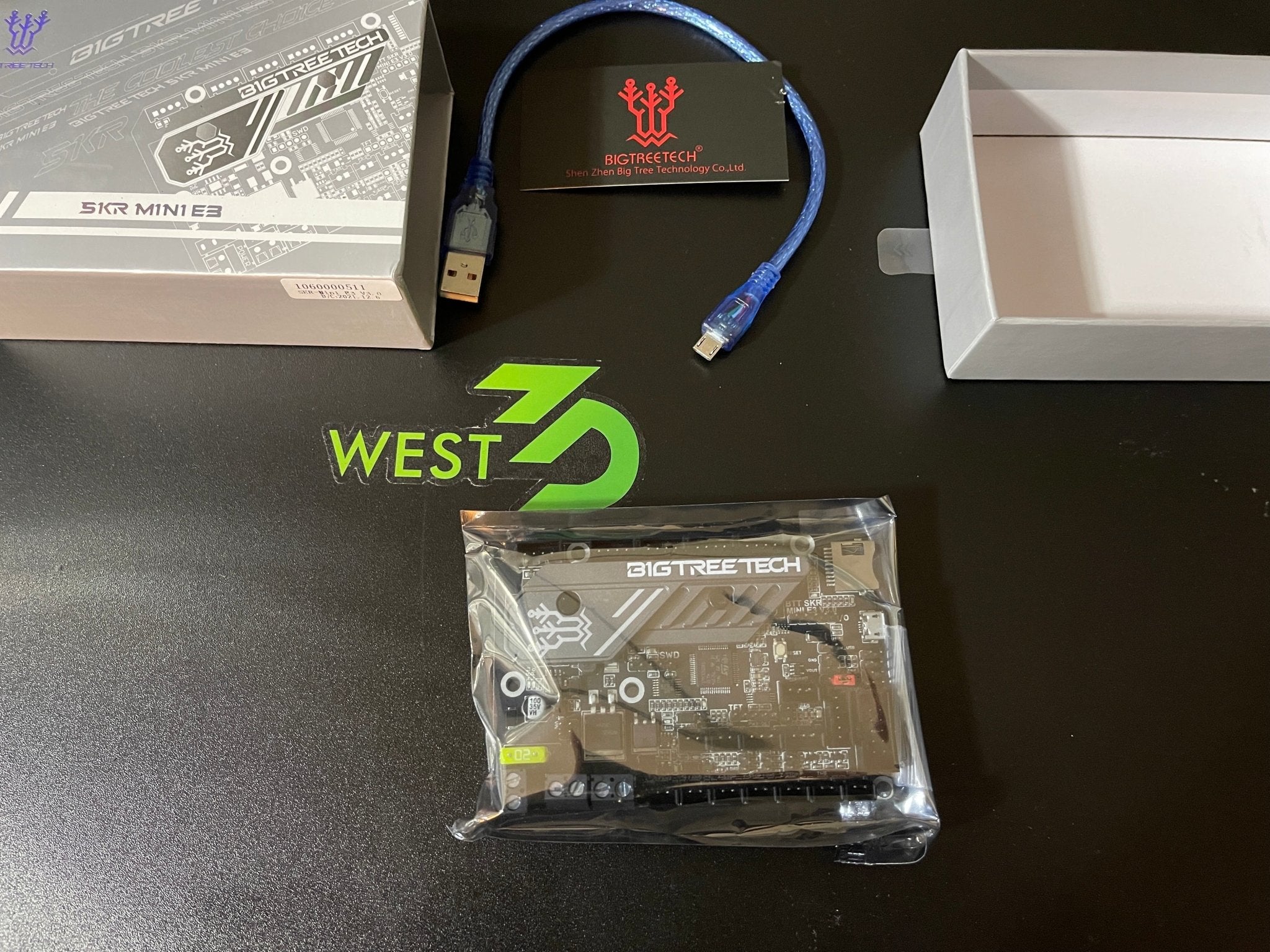
This little board is packed with features like it's bigger cousins and West3D has great prices. Can't go wrong
This is my second vivid mmu that I have got from them and I had an issue with the unit upon receiving it. I reached out to them and they replied instantly with things to try. Ultimately for this issue I believe it came to a mechanical issue. No fault of there’s as the shipping box was well packaged and the oem box in perfect shape. They send a return slip and sent me a new unit. I currently buy most of my 3d printer parts from them and will continue to purchase. Highly recommended

Keep in mind, you have to 3D print a bunch of parts for this thing. Having said that, it seems a more elegant solution compared to the TPU Tamer. I found the parts come out better when using PLA supports and PETG gray for the housing.

If you print lots of hot plastic, this comes in handy to replace the soft metal and rubber flow blocker between left/right nozzles on the H2D/H2C.

Bought this for my H2C, was reasonably priced.

Prints really well, hope they make json cuts profiles for each filament.
