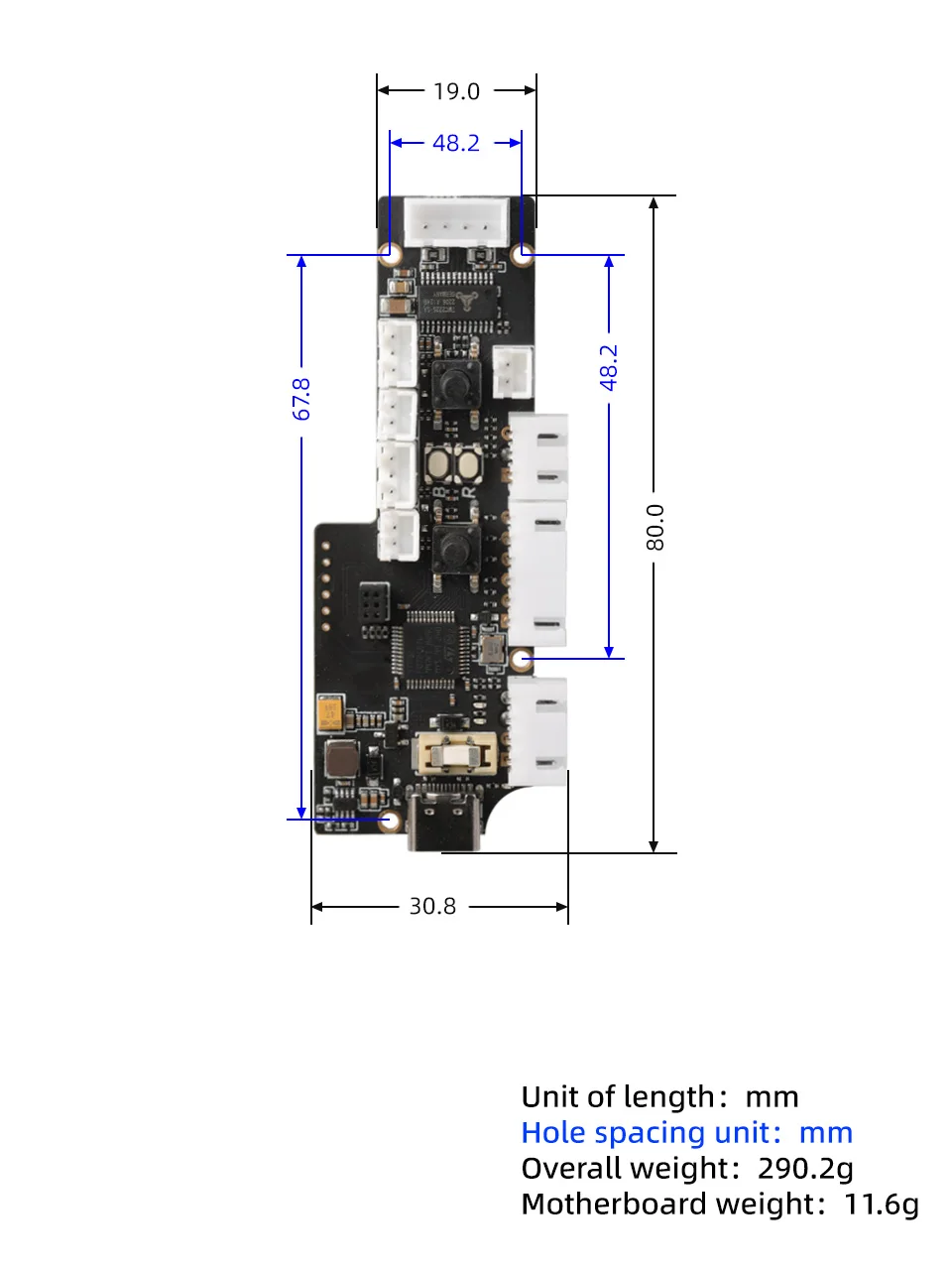
Using this on my Bambu H2D. Works quite well, and has solved my issue with the H2D refusing to feed from a heavy 3 kg spool. First impressions of the build quality is that it's pretty well put together -- doesn't feel like a cheap 3D printed product. Even though it is, indeed, cheap ($40 is crazy cheap) and 3D printed.
I have a few complaints as someone who isn't a hardcore, longtime 3D printer-er. I think these complaints are likely no biggie for someone who's been in the hobby since the Ender Dark Ages... or even the RepRap Before Times. Nothing that those boomers aren't used to. But to call this a "Complete" kit in the post-Bambu era of printers that work out of the box feels a bit misleading, because:
1. It does not come with a 12-24V power supply.
2. You have to wire up the 12-24V power supply yourself, including crimping the JST-XH connector to provide power to the buffer. This requires that you own a JST crimper and you don't mess up a single crimp because they only include the bare minimum number of $0.001 pins in the box, so if you mess up, you're FUBAR. If you're really going to make customers wire up the power supply themselves, then it at least makes sense to include an already-terminated JST-XH connector that users can wire nut onto a power supply instead of fiddling with JST crimps.
3. The documentation is *pretty* sparse. It seems to assume that you already know how these things work. For example, there is no indication (neither on the product nor in the documentation that I could find) which end should feed filament to the printer. There is also no explanation that you *must* use a PTFE tube. And there are very few provided pictures of it installed for you to deduce these secrets from.
4. The required PTFE tubes are not supplied
5. There are no instructions for how tight to set the feeder gear. I assume just tight enough that it doesn't slip?
6. In fact there are no installation instructions at all. Just assembly instructions should you wish to print your own housing.
7. I had no idea if this would work with my printer. I don't think the filament runout detector would work since I'm not running Klipper (which is fine, because my printer already has a runout sensor). But I had no idea whether the basic buffer feature would work either.
8. The back and forth buttons have strange behavior that I don't quite understand and that isn't explained anywhere. It doesn't just "manually feed while held down, stop manually feeding when let go" like I'd expect. It continues feeding after letting go... but only sometimes?
Overall, good product, albeit with some annoyances that would've generated a customer support ticket or two from me if I was not able to figure it out myself. Like I said, though, these are probably not an issue for grizzled veterans of the hobby.
I think they could easily fix most of these problems by spending an extra $3 on a 12V, 1 A power supply pre-terminated with a JST plug and including a couple feet of PTFE tubing. Could totally charge $10 more for that option as a convenience tax for those of us who don't want to wire it up ourselves. Then use that money to get a user manual/installation guide made.